A Renaissance in Pattern
Hadiya Williams left a nonprofit desk for clay, then for surface design, and built a body of work fluent in West African form and the graphic confidence of the Black Arts Movement.
The decision came in November 2016, after a wedding. Hadiya Williams had designed the invitation, attended the celebration in New Orleans, and returned home certain that she could no longer spend her days at a nonprofit office. Within months she had left.
From paper to clay to pattern
The name records where she began. Black Pepper Paperie started with stationery and event design, the natural province of a designer with more than twenty years in the field and degrees from Bowie State University and Columbia College Chicago. "I loved the tactile nature of paper and printing presses," she told the design journal Decorating Dissidence.
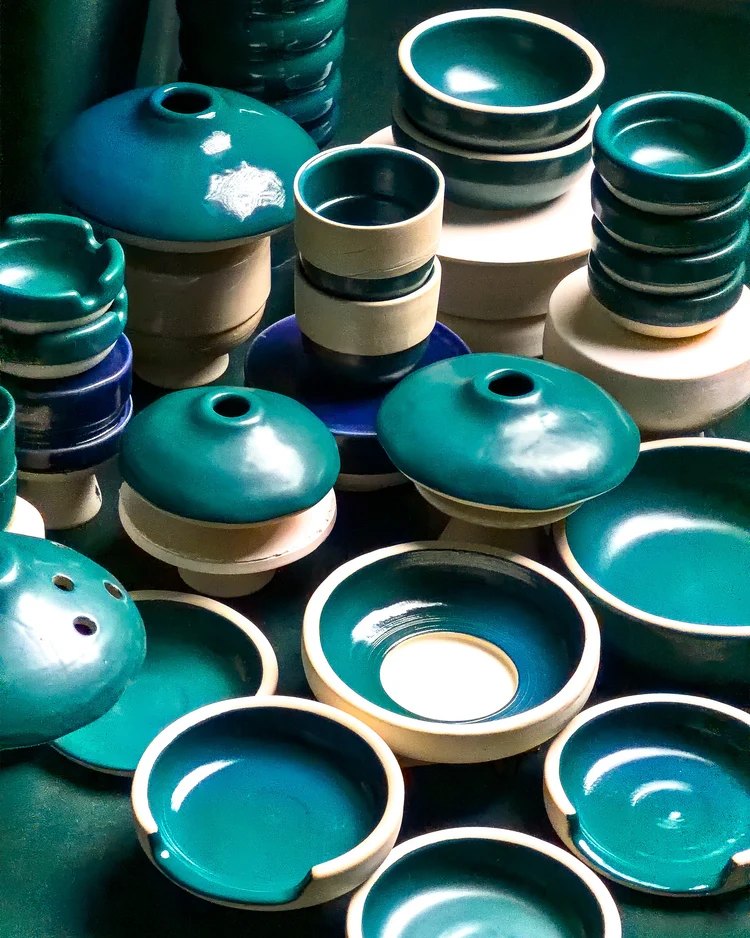
Then came clay. A ceramics workshop in February 2017 led to classes at local studios, an Instagram challenge that April, and an Etsy shop that May. She handbuilt her pieces, finished them in underglaze and clear glaze, and fired them a third time to fix their lines of gold luster. Once, she committed to making a hundred soap dishes in a hundred days. "There's definitely freedom in taking an everyday utilitarian item and turning it into a beautiful handcrafted object," she said of that project.
A vocabulary of her own
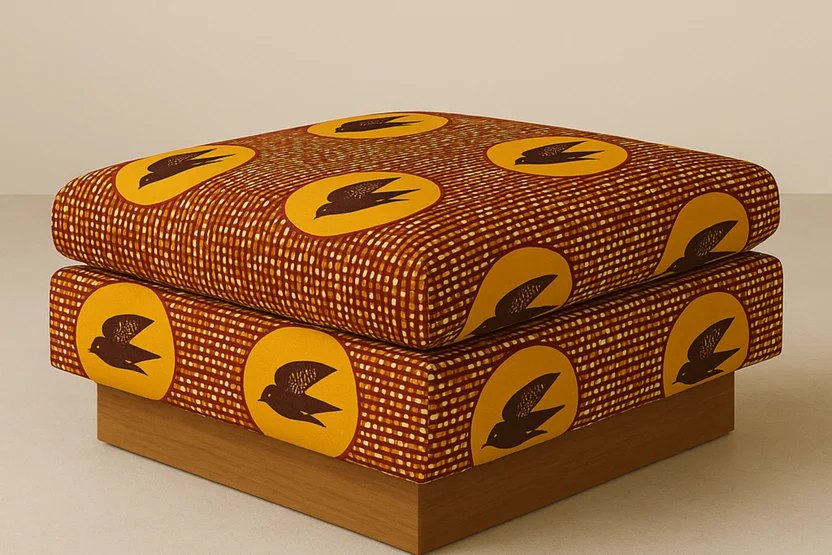
What unites the stationery, the ceramics and the surface design that followed is a visual language entirely her own. Williams draws, in her own description, on West African art forms, the Black Arts Movement, and the graphic design of the 1960s and 1970s. The result is pattern with posture: confident, rhythmic, unmistakably composed.
Larger institutions have taken notice. In 2022 she designed a wallcovering and textile collection for F. Schumacher and Co., built around the idea of wayfinding and inspired by The Wiz, followed by a second collection in 2025. With Nicole Crowder she created The Offering, an installation for the 2024 Smithsonian Design Triennial at Cooper Hewitt. Her studio reports that her work is held in the permanent collections of the National Museum of African American History and Culture and the National Trust for Historic Preservation.
Women's names, woven
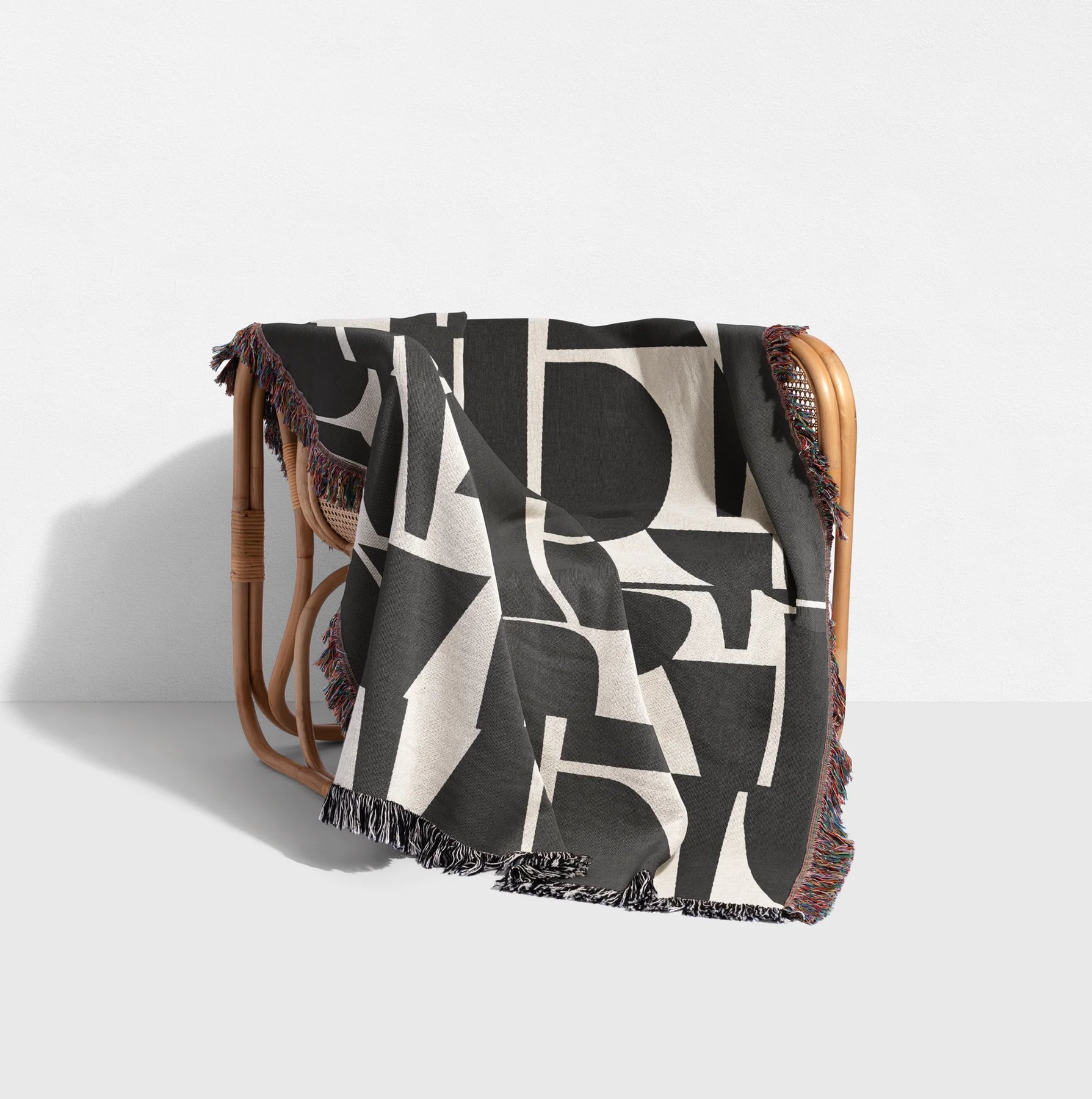
Her current Printed Home collection is a set of cotton blankets, fifty by sixty inches with fringed edges, each $120. Every one bears a woman's name: Nazarine, Edna, Stella, Lula, Fillis, Leola. It is a quiet gesture, the kind a reader might miss, and entirely characteristic. In Williams's hands even a throw blanket becomes a roll call.