
Indigo, Always Returning
Few colors have traveled as far or stayed as long. Designers are reaching for deep blue again, and the dye is older than any of them.
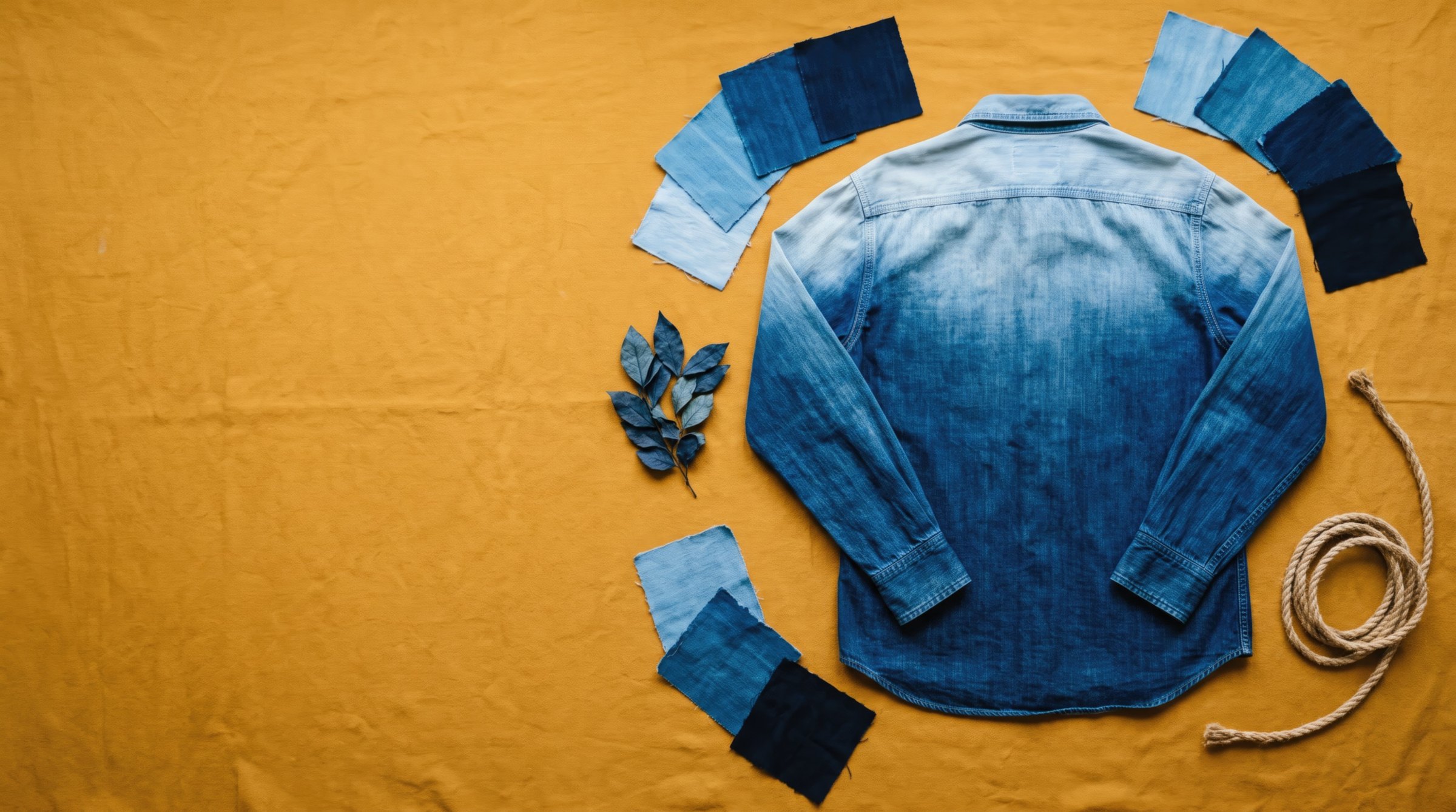
There is a work shirt in every family's memory that hung on a nail by the back door. It was blue once, deeply blue, the blue of a sky at the last moment before night. By the time you noticed it, the shoulders had faded to the color of rain, and the cuffs had gone almost white where they had brushed against everything a working life brushes against.
No one ever moved it. It simply hung there, softening.
The color that has to be coaxed
Indigo is not like other dyes. The plant, whether Indigofera in India and Africa or Japanese indigo grown for the craft called aizome, does not surrender its color easily. The leaves must ferment in a vat, the dye must be kept alive almost like a sourdough, and when cloth is lifted from the bath it emerges not blue at all but a yellowish green. Only in the air, as the dye meets oxygen, does it turn. Dyers watch the blue arrive before their eyes. To deepen it, they dip again, and again, and again.
That patience runs through every tradition indigo touches. In Yoruba adire, cloth is resisted with starch paste or tied tight before dyeing, so that pale patterns appear against the blue. In Japan, indigo-dyed cotton clothed farmers and firefighters and was prized for growing more beautiful with wear. In the American South, indigo was a plantation crop raised by enslaved people whose knowledge made it profitable, a history that sits inside the color whether we name it or not. And when chemists in Germany brought synthetic indigo to market at the end of the nineteenth century, the dye found its way into denim, and into nearly every wardrobe on earth.
Why designers keep returning
Deep blue has become, again, the neutral of choice for people tired of grey. It is calm without being cold, and it ages with unusual grace, which may be the real reason it endures. A beige sofa looks worn. An indigo throw looks lived in. The fading is not a flaw to be corrected but the record of a life, written in a color that seems to have been designed to remember.
The shirt on the nail
Come back to the back door. One day someone finally takes the shirt down to wash it, or give it away, or simply hold it. Turned over in the hands, the faded shoulders reveal something the eye had missed: in the seams, the folds, the places the sun never reached, the blue is still there. Deep and unbroken, exactly as it was on the first day.
Indigo, it turns out, does not leave. It only waits to be found again.