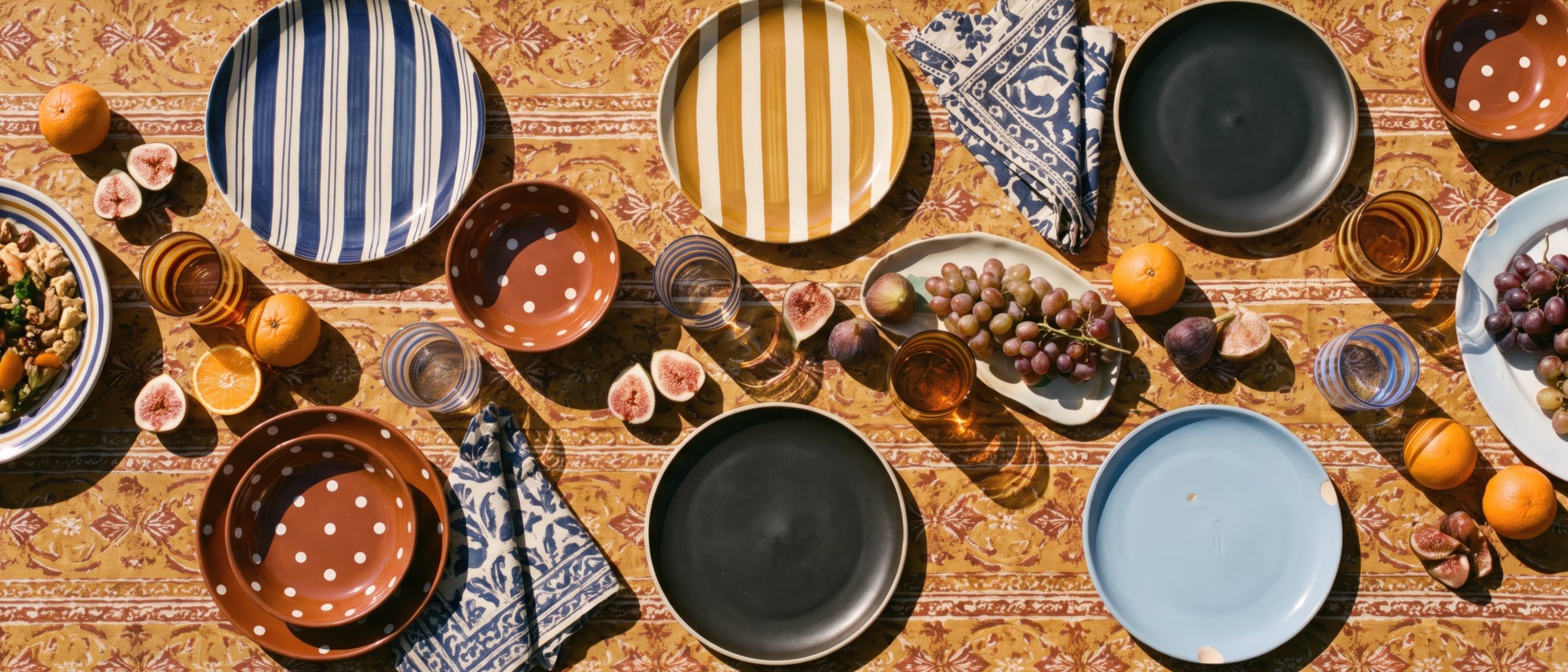
Every Courtyard a Loom
Tantuvi Studio designs its flatweaves in Brooklyn and entrusts them to weaving families in Rajasthan, whose craft began four centuries ago as flooring for nomads' tents.
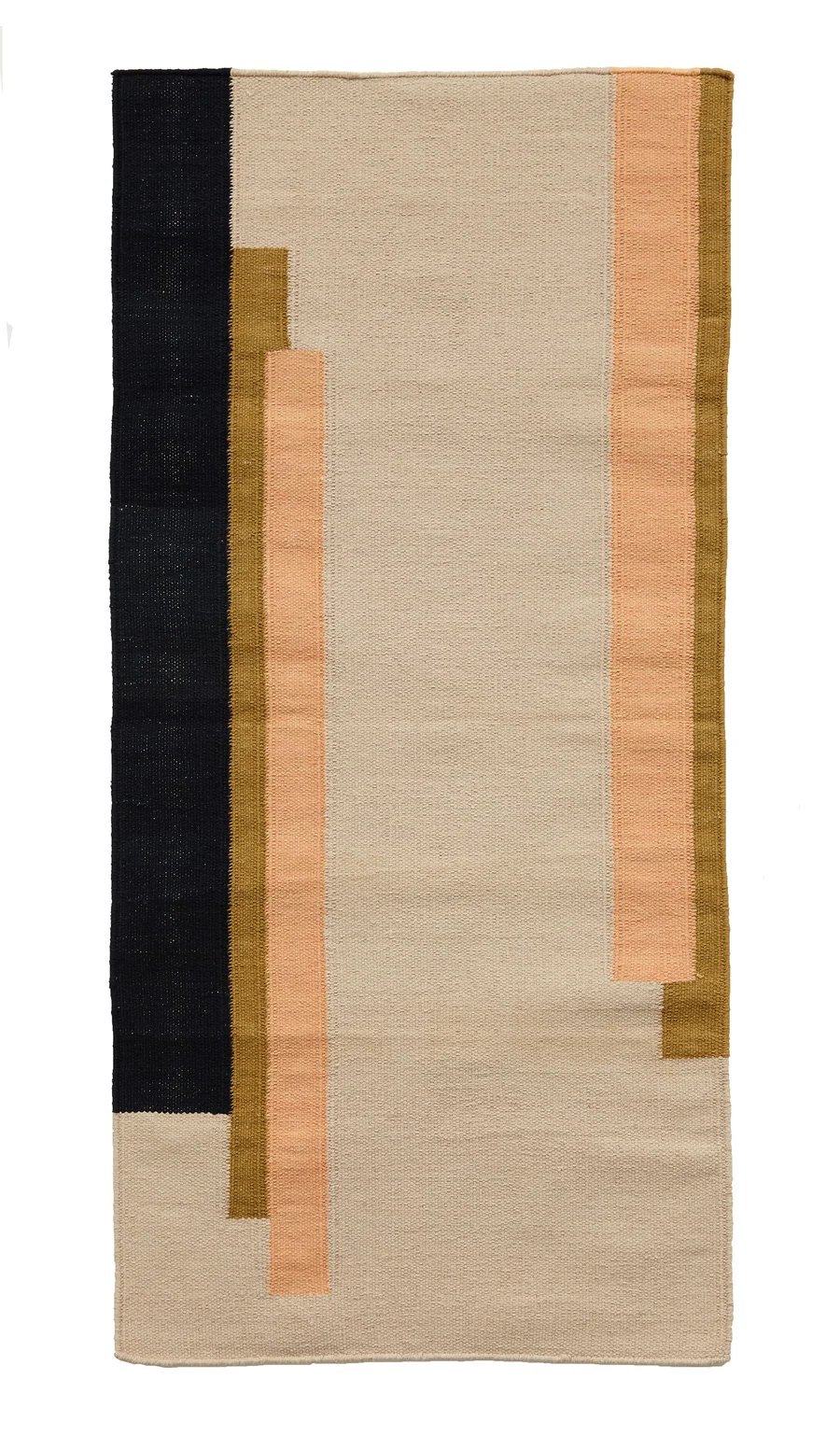
Arati Rao grew up in New York knowing that each of her mother's handwoven saris was named for a region of India. Cloth, for her, was always a kind of geography. "Textiles have always been in my life, my family being from India," she has said. "It's an inherent part of my culture."
Leaving the anonymous chain
As a corporate fashion designer, Rao grew uneasy with how little she knew of the people who made her products. "I wanted to have a more transparent production chain," she told Food52. In 2010 she left her job and spent months traveling through India, working with an ikat weaving cooperative in the south and developing fabrics with a small factory. Tantuvi, its name drawn from a Sanskrit word for weaver, launched in 2015, first in clothing. When a trade show asked whether she made homewares, she designed a small line of rugs in about six months. The orders followed.
How a rug is made
The designs are drawn in Brooklyn, where Rao shares creative direction with the painter Adam Sipe; his paintings and photographs, and the colors and folk motifs of India's deserts, supply the vocabulary. Master weavers in Rajasthan review each design, suggest changes, and assign it to a single family according to its particular skills. The studio's own account is lyrical in its plainness: every home has a courtyard with at least one panja loom.
The weavers, the studio writes, descend from seven generations of master weavers whose ancestors began making flatweaves four hundred years ago as durable flooring for nomads' tents. A third-generation dye house in Jaipur colors all the fiber by hand in small batches, without toxic chemicals or mordants. The materials read like a map: cotton from North India, hemp from the Northeast, wool from Bikaner, and reclaimed luxury silk re-spun into new yarn. A single rug occupies one artisan for between two weeks and two months.
On the floor
The Wool Waves square, five by five feet, is $675. The outdoor collection, launched at ICFF in 2023, is woven from recycled PET and hand-dyed in Jaipur, and is made to order from $450. A small reclaimed-silk rug, Quartz Onyx, is $150.
A Tantuvi rug is, finally, the opposite of the anonymous chain Rao once left behind. It arrives with a family, a courtyard and four hundred years attached.