The Table Where Nothing Matched
The matched set is giving way to the collected table, and with it a different idea of what a family's dishes are for.
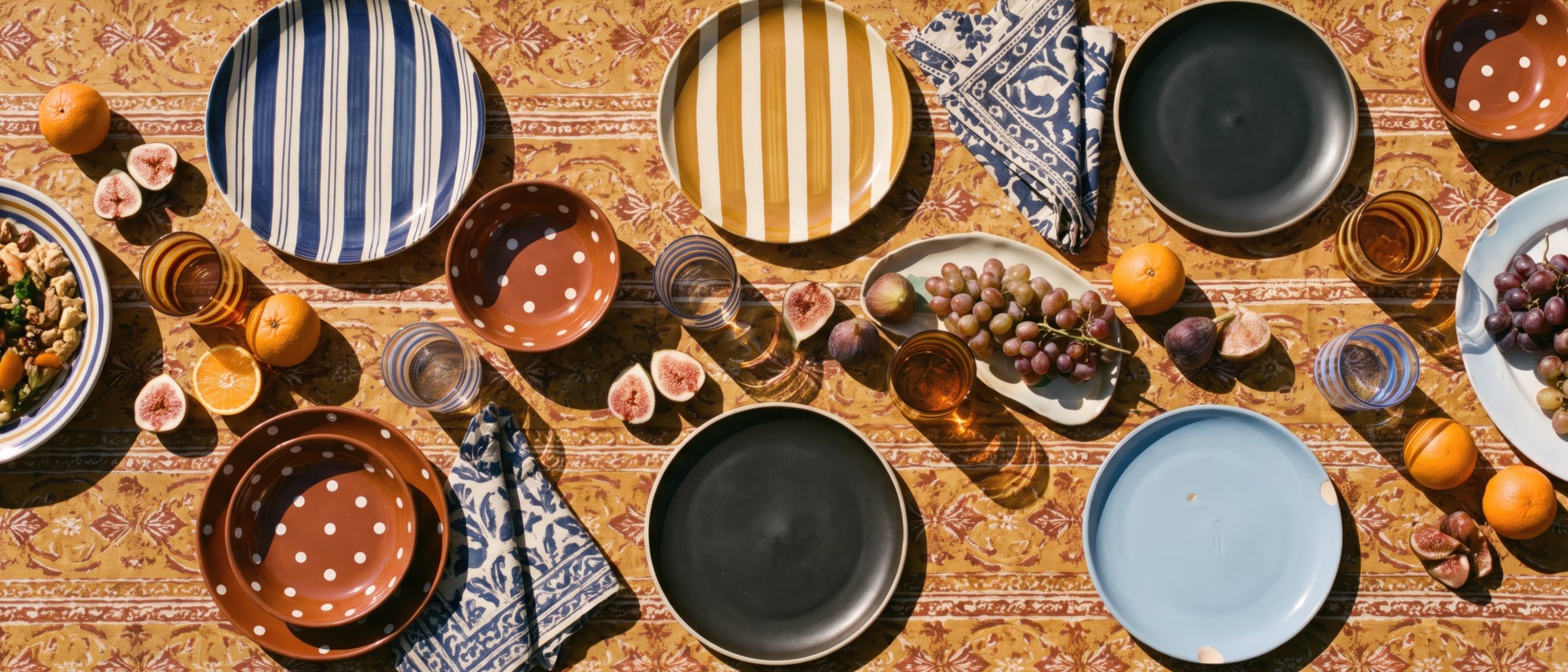
You remember the plates before you remember the food. The gold-rimmed one that came from a church rummage sale. The heavy ironstone, cool and white as a winter morning, that had crossed at least one state line in a box of newspaper. And the blue one with the chip at its edge, which no one was permitted to use, which sat on the table anyway, every Sunday, like a guest who had been invited so long ago that no one remembered why.
Nothing matched. It did not occur to anyone that it should.
The tyranny of the set
For much of the last century the matched service was the measure of a proper home. A bride registered for twelve place settings, and the set, complete and identical, was meant to last a lifetime. It promised order. It also promised a kind of anonymity: a table that could have belonged to anyone, set with plates that had no history yet.
The collected table makes the opposite promise. Its plates arrive one at a time, from estate sales and flea markets, from the backs of relatives' cupboards, from potters met at a market and never forgotten. Each one carries a date, a place and very often a person. Set together, they do not look like a catalogue. They look like a biography.
A table that tells
Designers have embraced this with real conviction. The fashionable table now layers a handmade stoneware charger beneath a fine-boned antique, sets a cut-glass goblet beside a rough tumbler, and treats the clash as the point. The effect is intimate rather than careless, because every choice is visible. A mismatched table cannot be bought in a single afternoon. It has to be accumulated, which is to say it has to be lived.
There is something in this that many families already knew. In households where inheritance arrived in fragments, a single surviving teacup or a grandmother's serving bowl, the collected table was never a trend. It was simply what remained, set out with pride.
What we pass on
Perhaps that is why the movement feels less like novelty than like recognition. We are tired of objects without memory. We want dishes that can be pointed to: that one was hers, this one came from the market in Oaxaca, those two were a wedding gift from people who are no longer married.
Which brings us back to the blue plate with the chipped edge, the one no one was allowed to use. Somewhere along the way it stopped being too precious to touch and became, simply, the one that is always set out first. A chip, it turns out, is only a flaw until it becomes a story. After that, it is the reason the plate is on the table at all.